Keynote Speakers
Keynote speakers for ISBNPA 2027 will be announced soon.
Stay tuned!

Moving Forward by Looking Back
MAY 27 | 17:00 – 18:00
Dr. Mark Tremblay
A Senior Scientist and Professor at the University of Ottawa, Dr. Tremblay has published over 700 scientific papers and is ranked in the top 1% of highly cited researchers globally.
He will explore how to confront the “sedentary lifestyle decay” by extracting lessons from “back to the basics” research models.
Mark Tremblay's Bio
Dr. Tremblay is a Senior Scientist with the Healthy Active Living and Obesity (HALO) Research Group at the Children’s Hospital of Eastern Ontario Research Institute and Professor of Pediatrics in the Faculty of Medicine, University of Ottawa. He is a Fellow of the Canadian Society for Exercise Physiology, Fellow of the American College of Sports Medicine, Fellow of the Canadian Academy of Health Sciences, President of the Active Healthy Kids Global Alliance, Founder of the Sedentary Behaviour Research Network, President of Outdoor Play Canada, and Adjunct/Visiting/Honorary Professor at six other universities on four continents. Dr. Tremblay has published >700 scientific papers and book chapters in the areas of childhood obesity, physical activity measurement, exercise physiology, sedentary physiology, outdoor play, and health surveillance. According to Scopus, his h-index is 115 and his published research has been cited >60,000 times, consistently placing him on the Clarivate list of highly cited researchers (top 1% in the world). Dr. Tremblay’s most productive work has resulted from his 37-year marriage to his wife Helen, yielding four wonderful children.
Session's Focus
A growing number of people today have the opportunity, or perhaps the misfortune, of living a completely sedentary lifestyle with omnipresent access to calorically dense ultra-processed foods. Not surprisingly, global obesity and metabolic dysregulation conditions are the highest ever recorded, and continue to rise in many areas of the world. Physical activity levels are low, sedentary behavior (and especially screen time) levels are high and increasing, and global fitness levels are declining. Global megatrends including the automation, mechanization and digitization of daily routines in recent generations has resulted in a reduction in all domains of physical activity and a disruption of movement behaviours more generally. Macro-environmental forces related to systemic and structural inequities, urbanization, climate change, and commercial determinants of health serve as both magnets and facilitators for such lifestyle decay. Strategies to successfully manage these forces and changes to lifestyle behaviours have proven elusive and would benefit from a deeper understanding of foundational temporal changes to these behaviours. One method to seek this understanding is to look back in time before such megatrends existed to seek clues on how such forces can be confronted or counter-balanced. This presentation will draw on evidence from various models of going back in time to extract lessons learned from long-lost lifestyles. Embracing an appreciation for a back to the basics orientation and simplicity of apparatus approach, we are reminded to see the forest not just the tree(s). Cross-cultural comparisons (e.g., Old Order Amish, rural Kenya), natural experiments (e.g., COVID-19), holistic approaches (e.g., 24-hour movement paradigm), and historically rooted behaviours (e.g., active outdoor play) will serve as research models for this journey exploring how to move forward by looking back. Bring your DeLorean and flux-capacitor because we are going back to the future!
A sustainable lifestyle for improving human and planetary health
MAY 28 | 10:00 – 11:00
Dr. Inge Huybrechts
Dr. Inge Huybrechts is a nutritional epidemiologist at the International Agency for Research on Cancer (IARC), where she leads the Sustainable Lifestyle and Cancer Team. With a PhD from Ghent University and over 20 years of experience, she has authored more than 400 peer-reviewed papers spanning nutrition, epidemiology, and planetary health
Inge Huybrecht's Bio
Dr. Inge Huybrechts is a nutritional epidemiologist in the Nutrition and Metabolism Branch at the International Agency for Research on Cancer, with a background in nutrition and a PhD in medical sciences (Ghent University, Belgium). She is leading the Sustainable Lifestyle and Cancer Team and has more than 20 years of experience with nutrition research and lecturing in the domain of nutritional epidemiology. She investigated lifestyle causes of non-communicable diseases, addressed by observational and intervention studies. She is author in more than 400 peer-reviewed scientific papers, published in journals within the fields of nutrition, epidemiology and planetary health. Inge coordinated several projects in the field of epidemiology and public health in the past 20 years. She has built up expertise in dietary assessment methodologies for use in different settings and population groups, including children and adolescents and has particular interest in the adverse health effects of the nutrition transition.
Inge has supervised several PhD students in the past 15 years and has been teaching academic courses on several health-related topics such as nutritional epidemiology and public health. Her ongoing projects aim at investigating associations between dietary patterns, food biodiversity and cancer risk while considering co-benefits for health and planetary impact. Inge obtained the habilitation à diriger des recherches (HDR) in 2023 from l’Université Claude Bernard Lyon 1.
Session's Focus

Healthier Diets for All: Behavioural Approaches Across Digital, Retail, and Healthcare Settings
MAY 29 | 10:00 – 11:00
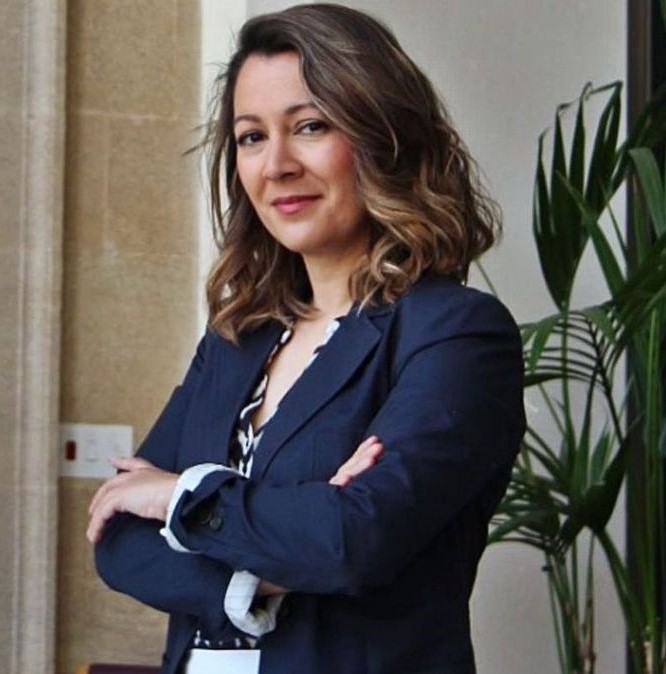
Dr. Carmen Piernas
A nutrition scientist and Ramón y Cajal Fellow at the University of Granada, Dr. Piernas specializes in Precision Nutrition and cardiometabolic disease prevention.
Her talk focuses on leveraging digital technologies and retail environments, like supermarket loyalty data, to drive population-level dietary change.
Carmen Piernas' Bio
Carmen Piernas is a nutrition scientist and Ramón y Cajal Fellow at the University of Granada (Spain). She obtained her PhD in Nutrition and Epidemiology from the University of North Carolina at Chapel Hill (USA) and held a University Research Lecturer position at the University of Oxford (UK) from 2015 to 2021.
Some of her research has focused on the design, implementation, and evaluation of behavioural interventions for the prevention of cardiometabolic diseases. Her current work is grounded in the field of Precision Nutrition and integrates dietary and lifestyle data with multi-omics approaches to improve the understanding of individual variability in diet–disease relationships and to inform more effective prevention strategies for non-communicable diseases.
Session's Focus
Poor diet is a leading driver of non-communicable diseases, yet achieving population-level dietary change requires effective behavioural approaches embedded within the systems that shape everyday food choices. This keynote will examine a series of studies exploring how behavioural science and digital technologies can be leveraged to promote healthier and more sustainable diets across food retail environments and healthcare settings.
The lecture will present evidence from interventions testing a range of strategies within supermarket settings, from experimental studies conducted in a simulated digital platform to real-world natural experiments evaluating in-store strategies to shift food purchasing towards healthier and more sustainable options. It will also highlight the development and testing of consumer-facing digital tools, including a smartphone app that provide real-time nutritional rankings of grocery products to support healthier purchasing decisions.
The keynote will further address the role of healthcare settings as critical leverage points for dietary change, drawing on primary care-based interventions that combine digital platforms with dietary monitoring and personalised feedback. This includes work using supermarket loyalty card data to deliver personalised dietary feedback and healthier product swaps within a primary care-based intervention. Finally, emerging research on integrated digital lifestyle monitoring tools will be introduced, illustrating how diet can be addressed alongside physical activity, sleep, alcohol and tobacco use, and mental health within a unified behavioural framework.

Joint actions at national level to make healthy eating and physical activity the easiest choices
MAY 30 | 11:30 – 12:35
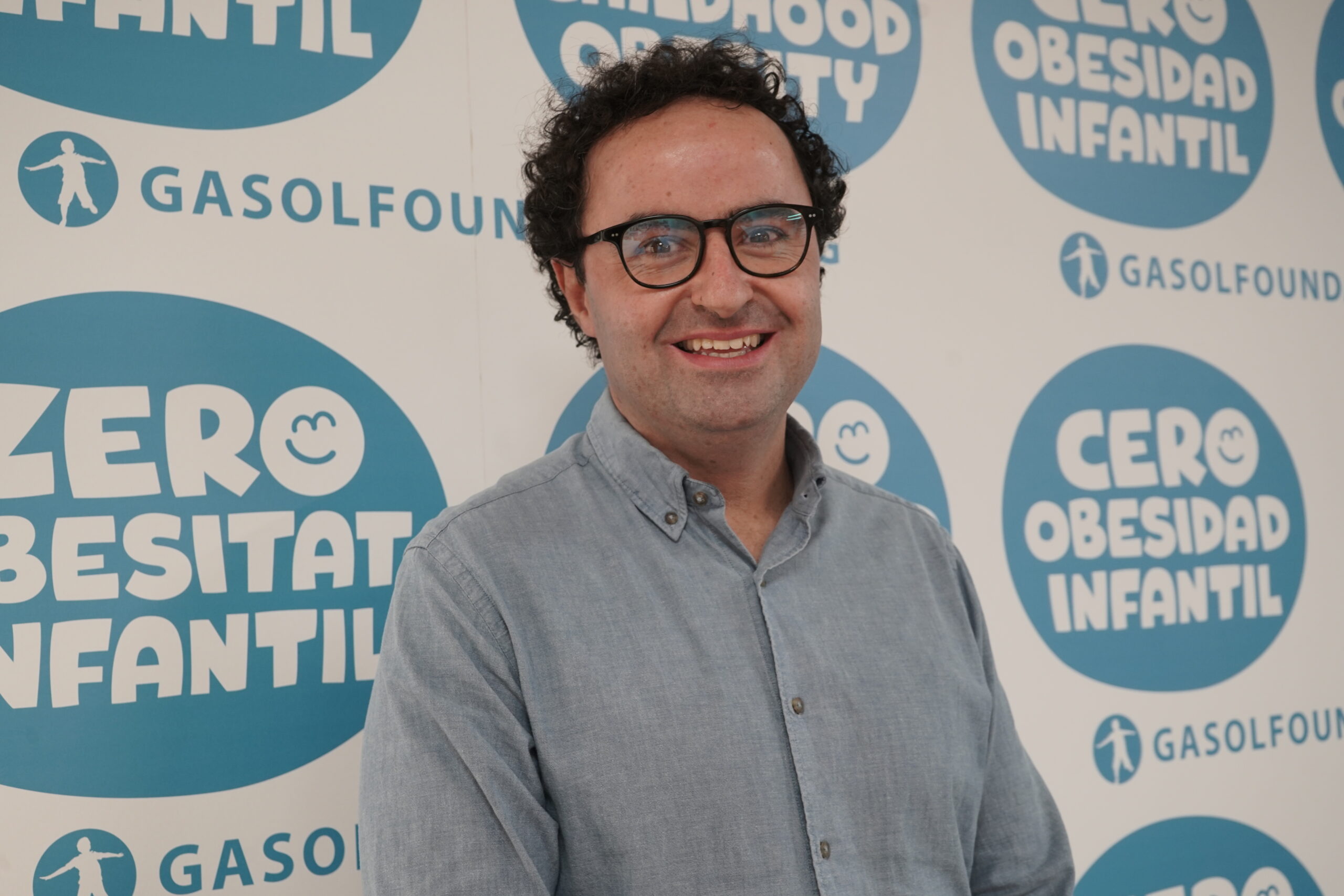
Dr. Ester Samper & Dr. Santiago Gómez
Dr. Gómez (Gasol Foundation) and Dr. Samper (Spanish Ministry of Health) bring together expertise in community-based obesity prevention and national health policy.
Ester Samper's Bio
Ester Samper is currently a superior technician in the General Sub-Directorate of Health Promotion, Prevention and Equity at the Ministry of Health (Spain), working mainly on national policies on physical activity, nutrition and equity. She holds a degree in Medicine, a Master’s degree in Biomedical Biotechnology and a PhD in Cardiovascular Tissue Engineering. She has previously worked in regenerative sciences and health communication for various media outlets aimed at the general public or the healthcare sector.
Santiago Gómez' Bio
Dr. Santi F. Gómez, Global director of research and programs of the Gasol Foundation. Psychologist, master’s in health and community welfare, master’s in public health and PhD focused on analyzing the prevalence, determinants and preventive interventions of childhood obesity. His professional experience in the third sector and public health agencies has been always focused on the design, implementation and evaluation of community-based interventions addressed to prevent childhood obesity. PI of the PASOS study, nation-wide representative for Spanish youth, and of other relevant studies in the field of childhood obesity. Associate professor at the University of Lleida (Spain) and member of the Spanish Society of Epidemiology.
Session's Focus
This joint presentation will discuss national-level policy and community interventions designed to integrate healthy habits into daily life.